Love is in your gut
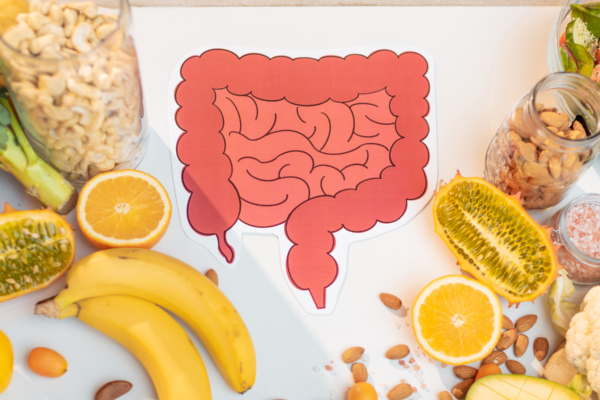
I'm writing this around Valentine’s Day which is all about celebrating feelings of the heart. However our gut has much more of a connection to love than you think. There are in fact many idiom’s related to this connection. You will probably have heard of the expression the way to someone’s heart is through their stomach or refer to butterflies in the tummy when you feel that instant romantic spark. However beyond the metaphysical there is a very real, long-standing and close knit relationship we have with our gut that in turn gives back to us in many loving ways too.
Most of this lies with the deeply intertwined and life long relationship we have with the trillions of microbes that live in our gut, collectively known as the gut microbiome. These trillions of microbes will give back to us in myriad devoted ways including supporting our immune system, managing inflammation and crucially produce neurotransmitters that support our mood and mental wellbeing. It is some of these same neurotransmitters that have a significant role in the chemicals created when we are in love.
Serotonin, often dubbed the ‘happy’ hormone, is one which we might just think of being only made in our brain when actually 95% of our overall serotonin is produced and managed by our gut microbiome. Dopamine, which is often associated with ‘pleasure’ is also similarly produced in our gut, up to 50% in fact, but is also the hormone that is produced when we are attracted to someone initially. This is why falling in love can be equated to having a natural high. Maintaining healthy amounts of both serotonin and dopamine is therefore part of how we form relationships.
The third in this ‘menage-a-trois’ of chemicals is oxytocin, the so-called ‘love hormone’. This is also heightened when we fall in love and is implicated in the act of reproduction as well as closely related to bonding and connection. Oxytocin is produced by the hypothalamus in the brain and secreted in the pituitary gland but it is also highly correlated with our gut microbiome. Of course it makes sense when you really think about it as increased propagation means sharing more intimacies such as sex and kissing and as such transferring as much as 8 million microbes per second between partners. That’s a big win for our microbiome.
Hormones aside there is also even data to show that the composition of our microbiome might make us more or attractive to a potential suitor. Our microbiome may be more attuned than us it seems to finding the perfect partner. Like a microbiome ‘biological’ dating app!
So what can we do to give our gut some more love? Here’s some of my top five tips…
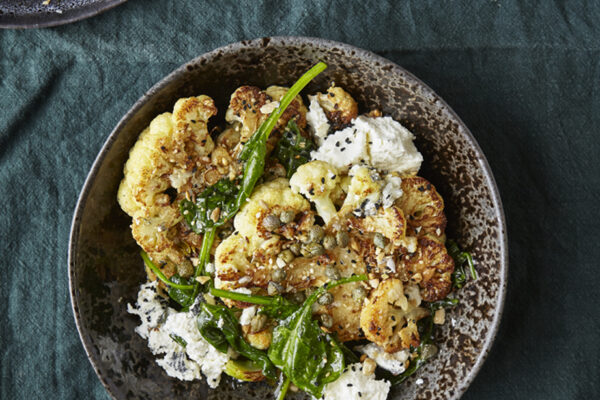
- Make a dinner date with our microbiome and include plenty of fibre and colourful plants on our plate as this helps to nourish our gut microbes so they can produce all of those neurotransmitter chemicals above as well as myriad other positive substances. Prebiotics in particular are like a love bomb for our gut so try to enrich your diet with foods such as onions, leeks, asparagus, oats.
- Feel the love with ferments such as sauerkraut, kimchi, miso, live yogurt and kefir which naturally contain an abundance of beneficial microbes that can have a supportive role for our gut health.
- Hugging and kissing helps us to share microbes which can be with people and pets as research shows a more diverse and enriched microbiome equates to a healthier microbiome.
- Self abdominal massage can really help to soothe the gut and there are plenty of online tutorials for this. Make sure to work in an anti-clockwise direction
- Positive affirmations are just as important for our gut as our mind as this helps us to reduce stress which can impact on the health of our microbiome. Gratitude lists can be useful for some people or just writing down some statements that feel like they resonate and you can repeat on a daily basis can help to strengthen positive thought patterns.
References
Learn