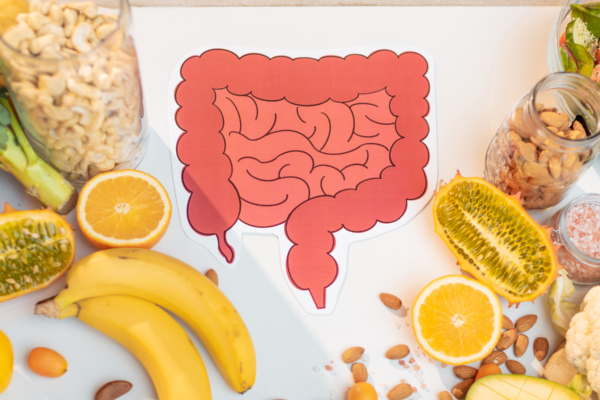
A guide to positive gut health habits for life
The start of the year is stereotypically when we might be setting those ill-fated resolutions. And indeed, ill-fated is really the best word, as stats show that most of us fail to keep these resolutions beyond the month of January. This is largely due to the fact they are way too big a task which means even beginning them feels completely overwhelming, or we might have set unrealistic goals in terms of timing so that we feel completely disheartened when we don’t see quick results. Conversely, they might be too vague in what we are trying to achieve. Also, why wait until January if you need to make a change and not when you realise you need to make it? The reason you put it off before is often the reason why it never happens. Resolutions can therefore almost always be doomed to fail.
Having a focus on improving our gut health is also free from the resolution setting mantras especially as we now know just how important it is to our overall health and wellbeing. However, like many of the other stereotypical resolutions, we also know that the road to a healthier gut is never going to be a quick fix or a silver bullet and it is the small changes over many months to even years that bring the most long-standing benefits. Moreover we need to remember that the relationship we have with our microbes is a lifetime one. Consistency is key and overall patterns over time that should be the main focus and not striving for perfection. Furthermore aiming to make micro changes over the course of a year instead of lofty goals with almost always lead to longer term benefits. Plus trying to focus on things you do want to do and not what you don’t can help to reframe them for better success.
With that in mind here are some of my simple gut health habits to try and implement one by one so that you can integrate them for life and not just for Jan…
ADD IN GUT NOURISHING FOODS
Typically at the start of the year with the ubiquitous diets and detoxes the focus is inherently on deprivation which we now know isn’t sustainable nor effective longer term. Furthermore it can also have a detrimental impact on our gut health when our diet is too restrictive. Therefore reframing this from a positive nutrition and gut health mindset focus let’s try and create ways in which we can add in foods that nourish our gut.
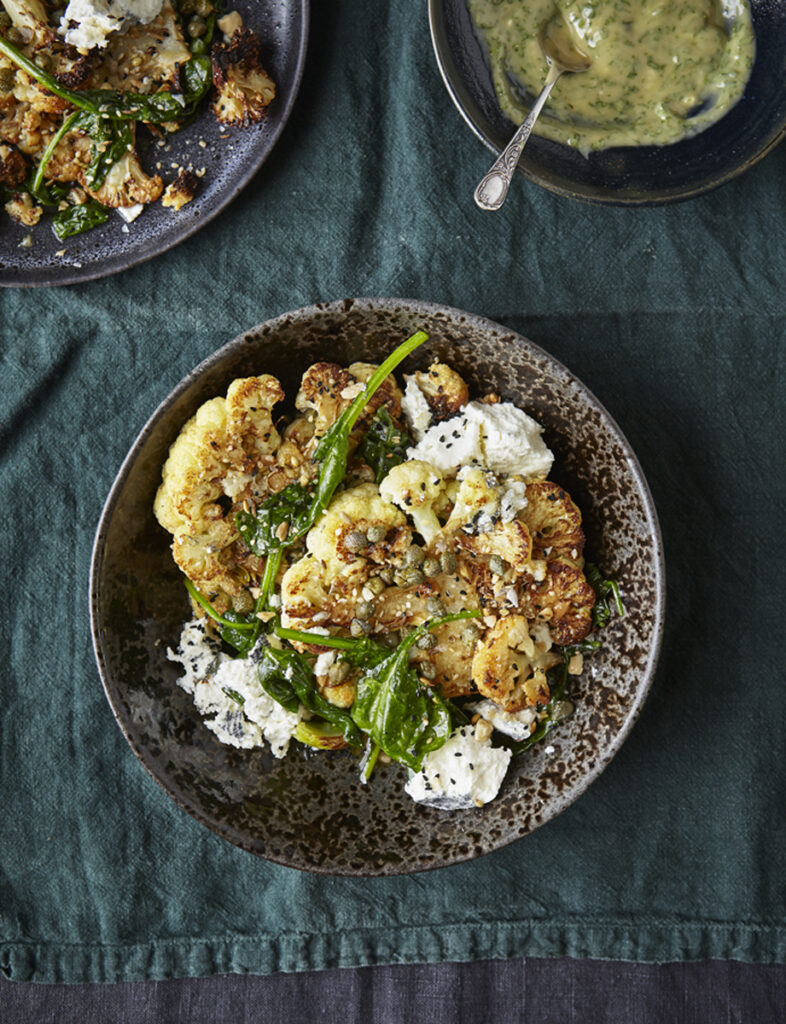
One of the key steps to a healthier gut is increasing the amount of plants in our diet as this brings in more fibre and polyphenols which we know support a more diverse gut microbiome. One of my tips is to have one meat-free day per week will help us to naturally increase the amounts of plants in our diet. You can try my Beet kebab recipe here https://evekalinik.com/beet-kebab-couscous-bowl-with-beet-borani/ or this ‘meaty’ Cauliflower steak one here https://evekalinik.com/dukkah-cauliflower-steak-with-green-tahini-spinach-curd/ if you need some inspiration to get you started. Making up nut & seed mixes with 5-6 types can also be a really easy habit to get into and increase diversity of plants. In addition, soups blending 3-4 veggies can be a really simple and delicious way to up our plant quota. Batch cooking and freezing can help make this super convenient too. And think about adding in herbs and spices to every meal (the dried ones count too) as this brings in extra flavour as well as more plants.
Adding in fermented foods to a few meals per week can also help to provide a source of live microbes that may have a positive impact on our gut health. Rather than eating an entire jar of sauerkraut in one sitting (your gut definitely won’t thank you for that!) it is much better to have little and often when it comes to ferments as the bacteria in them have more of a transient effect. Using them as regular side condiments to a simple meal can elevate the flavours in our food as well as a little extra helping of microbes for our gut too.
And, not forgetting about prebiotic foods that help to feed the good bugs in our gut which includes oats, onions, asparagus and leeks. However, if you want a gentle supplement you can also add in a daily sachet of Bimuno which also works cumulatively.
LEARN ONE NEW RECIPE PER MONTH
One of the common resolutions is to totally give up takeaways and ultra-processed ‘junk’ food and although living on these exclusively is obviously not good for our health, there is no need to deny them entirely as this is not necessary nor sustainable. Our gut is perfectly equipped to process the occasionally takeaway and piece of cake. However often we tend to gravitate towards ultra-processed food for ease and convenience but also because we might be bored with the same meals we are cooking for ourselves. So with that in mind learning a new recipe every month can easily broaden our repertoire and we can have the satisfaction of having made something ourselves. This means overall we will be eating less ultra-processed food and more whole foods which is a win win for both us and our microbiome. Plus, by the end of the year you will have another 12 dishes you have mastered.
SWITCH OFF DEVICES AT MEALTIMES
This is probably one of the most game changing habits to implement for our gut health as by removing the distractions of devices at meal times it allows us to slow down taking time over our meals which in itself can help to alleviate some of the more common digestive complaints such as bloating, gas and reflux. Once you get into the habit of not having phones and TV on you can begin to notice just how much more taste and flavour comes into our food when we are more present with our plate. If you need to use a phone drawer to put phones out of sight initially this can be a good tactic to help instil the habit.
GIVE YOUR GUT A BREAK
The concept of intermittent fasting has been much more popular in diet culture in recent years which, despite a serious lack of evidence, has been mostly linked to weight loss. Often this fasting can be around 16 hours in total, however there is research to demonstrate that allowing a 12 hour fast every day can have a positive impact on inflammatory markers and gut health. If we consider that anything other than water, black tea and coffee counts as ‘food’ we might well be eating for up to 16 hours per day. This doesn’t give adequate time for our gut to rest and allow it to manage processes such as inflammation. Therefore by shortening our window to 12 hours on and 12 hours off we can gain the benefits of this without anything too extreme. This is also something that is much more sustainable and allows us to enjoy the sociability of eating together which is an integral part of our wellbeing.
PRACTISE 5 MINUTES DAILY MEDITATION
We might assume that we need to be meditating for hours for it to have any real effect when actually 5 minutes can be a great place to get started and crucially form a habit that will have more longstanding cumulative benefits. Meditation helps us to reset the gut-brain connection which is extremely powerful and why stress underpins digestive conditions such as IBS. Breathing exercises can be a useful way to implement this, in particular the box breathing technique which simply requires breathing in for a count of 4-5 or more, holding the breath on full for the same time, breathing out for the same time and holding on empty for the same time. This can work really well to steady the mind and provide some focus. Tacking this onto an already formed habit like brushing our teeth is a good way to ingrain it so you might want to include this as part of your morning or evening routine. Moreover with consistency it might lead to an increase in the time spent practising.
ADOPT A MORE MINDFUL DRINKING APPROACH
The start of the year is often when people shun booze for Jan after the merriment of the Christmas holidays. Dry Jan might be something you want to do and good for you if that’s the case but all too often people tend to abstain altogether in January only to go back to their usual drinking patterns as soon as February starts. We know that alcohol has a direct inflammatory approach to the gut especially when consumed in excess and particularly on an empty stomach so there is a need to be more mindful in how we enjoy it. However, looking to reduce overall consumption rather than necessarily removing altogether, especially if the intention is to resume drinking alcohol after something like dry Jan can have more longer term benefits. Rosamund Dean in her book ‘Mindful Drinking’ suggests choosing three days per week where you might consume alcohol and limiting to three drinks maximum. This can help to avoid that binge/abstain relationship. Taken over the entire year this will have much more powerful and long-lasting effects than a quick ‘detox’ period.
References
Learn